Is IPTV Subscription in Australia Worth It?
The streaming landscape in Australia has become a bloody expensive mess. Between Netflix, Stan, Binge, Disney+, and Amazon Prime, you’re easily dropping over $60 a month for the privilege of “having it all” — and still missing out on international content. That’s where IPTV subscriptions enter the chat, promising everything everywhere all at once. But are they actually worth your dollarydoos?
- IPTV subscriptions offer access to thousands of international channels and on-demand content at a fraction of traditional streaming costs
- Legal IPTV services in Australia include Fetch TV, Foxtel Now and Kayo Sports — while many other providers operate in grey legal areas
- Quality IPTV providers typically charge between $10-25 AUD monthly with significant discounts for annual subscriptions
- A VPN is strongly recommended when using IPTV services to enhance privacy and bypass geo-restrictions
- The best IPTV experiences require decent broadband (minimum 25Mbps) and compatible devices like Android TV boxes, FireSticks or smart TVs
What Exactly Is IPTV and Why Are Aussies Flocking to It?
Internet Protocol Television (IPTV) delivers television content over Internet Protocol (IP) networks instead of traditional satellite or cable formats. In plain English, it’s TV content streamed over the internet rather than through an antenna or cable connection. This technology has revolutionised how we consume media, especially in geographically isolated countries like Australia where content availability has historically been limited.
The core appeal is simple: IPTV subscriptions typically offer thousands of channels from around the world, extensive video-on-demand (VOD) libraries, and catch-up services that let you watch missed programs. For Australians fed up with the “Australia tax” — the premium we often pay for digital services compared to other countries — IPTV represents a tempting alternative to the fragmented streaming landscape.
Unlike traditional Australian pay TV services that might set you back $50-100 monthly, quality IPTV subscriptions typically range from $10-25 per month, with significant discounts for quarterly or annual commitments. This cost difference alone explains why many in Sydney, Melbourne, Brisbane and beyond are making the switch, particularly as cost-of-living pressures mount.
Beyond price, it’s the sheer breadth of content that’s driving adoption. While Stan might have Australian content covered and Binge handles HBO shows, neither gives you access to UK-exclusive BBC programs, American cable networks, European sports channels, and Asian entertainment networks. IPTV potentially bundles all these into one service with a single interface and search function — the holy grail of content consumption that mainstream services have deliberately fragmented.

The Legal Landscape of IPTV in Australia
Let’s address the elephant in the room — the legality of IPTV services in Australia exists in various shades of grey. There are completely legitimate IPTV providers operating in Australia, including Fetch TV, Foxtel Now, and Kayo Sports. These services have secured proper licensing agreements to distribute content legally, though their libraries are typically more limited than international IPTV providers.
According to Australia’s copyright laws, accessing content through unlicensed services that don’t pay appropriate royalties to content creators technically constitutes copyright infringement. The Australian government has taken steps to block pirate websites and services through amendments to the Copyright Act, giving courts the power to require ISPs to block access to overseas websites that facilitate copyright infringement.
However, enforcement against individual users (rather than service providers) remains relatively rare. The Australian Communications and Media Authority (ACMA) tends to focus on larger-scale operations and distributors rather than end users. That said, the legal risks shouldn’t be dismissed entirely. The Copyright Amendment (Online Infringement) Act gives authorities significant powers to crack down on illegal streaming services.
Many IPTV providers operate from jurisdictions with different copyright enforcement standards, creating a complex international legal web. Some services claim legitimacy through various technical arguments about content redistribution, though these claims often don’t hold water under Australian law. As a consumer, it’s worth understanding that the cheapest services offering “everything for nothing” are likely operating outside proper licensing frameworks.
For peace of mind, some Australians opt for IPTV services that focus on content from specific regions where licensing is clearly established, or they use IPTV primarily for free-to-air channels from around the world, which presents fewer legal concerns. VPNs (Virtual Private Networks) are commonly used alongside IPTV services not just for accessing geo-restricted content but also for privacy protection.
| IPTV Type | Legal Status | Examples in Australia |
|---|---|---|
| Licensed Services | Fully Legal | Fetch TV, Foxtel Now, Kayo |
| Free-to-Air Aggregators | Generally Legal | TVPlayer, Freeview |
| Grey Market Services | Legally Questionable | Many international providers |
| Pirate Services | Clearly Illegal | Services explicitly offering premium content without licensing |
What You’ll Actually Get with an IPTV Subscription
The content available through IPTV subscriptions varies dramatically depending on the provider, but most comprehensive services offer several key components. Live TV channels are the backbone of most IPTV services, with premium providers offering anywhere from 3,000 to 15,000+ channels from around the globe. These typically include major networks from the US, UK, Canada, Australia, European countries, and Asian nations.
Sports content is often a major selling point, with access to premium sports channels that would otherwise require expensive subscriptions. This includes coverage of AFL, NRL, cricket, and international sports that are difficult to access in Australia like American NFL, European football leagues, and global racing events. During major tournaments like the World Cup or Olympics, the value proposition becomes particularly compelling.
Video-on-demand (VOD) libraries are another significant component, functioning similar to Netflix or Stan but often with a much larger catalogue of movies and TV series. Some providers boast libraries of 10,000+ movies and complete series collections. The trade-off is that the organisation and user interface of these libraries may not be as polished as mainstream services.
Catch-up TV functionality allows you to watch recently aired programs you might have missed, similar to ABC iView or 9Now but extending to international channels. This is particularly valuable for Australians who follow overseas programs that might air at inconvenient times due to time zone differences.
The technical quality varies significantly between providers. Premium services offer full HD (1080p) streams for most channels and even 4K content for select programming. Budget services might limit streams to 720p or lower. Similarly, stream stability — the likelihood of buffering or disconnections — directly correlates with the reputation and price point of the provider. Top-tier services maintain multiple servers globally to ensure consistent performance, while cheaper alternatives might suffer during peak viewing hours.

Is IPTV Subscription in Australia Worth It? — iptvservice.com.au
How Much Does IPTV Really Cost in Australia?
IPTV subscription pricing in Australia follows several common structures, but there’s significant variation between providers. Monthly subscriptions typically range from AUD$10-25, with the sweet spot for reliable, high-quality services hovering around $15-18 per month. Most providers offer substantial discounts for longer commitment periods, with quarterly plans reducing the monthly equivalent by 10-20%, and annual subscriptions often bringing the monthly cost down by 30-40%.
The pricing tiers usually correlate with service quality and content availability. Budget options under $10 monthly often suffer from reliability issues, limited channel selections, and poor customer support. Mid-range services ($12-18) generally offer a good balance of reliability and content variety, while premium options ($20+) provide the highest stream quality, largest content libraries, and most responsive customer service.
Many providers offer multi-connection plans, allowing you to use the service on several devices simultaneously. A single connection might cost $15 monthly, while a package supporting 3-5 concurrent streams might run $25-30 — making it perfect for sharing with family members. This approach offers significant value compared to mainstream streaming services that charge full price for each household.
When comparing costs against traditional Australian entertainment options, the value proposition becomes clear. A basic Foxtel package starts at around $49 monthly, while subscribing to Netflix ($16.99), Stan ($16), Disney+ ($13.99), and Binge ($18) would set you back nearly $65 monthly — and still leave significant content gaps. A quality IPTV service at $15-20 monthly potentially replaces all of these with a broader content selection.
Beyond the subscription itself, you should factor in potential additional costs. A reliable VPN service adds approximately $5-12 monthly (though multi-year VPN subscriptions can bring this down substantially). If you don’t already have a compatible device, a one-time purchase of a streaming device like an Android TV Box ($80-150) or Amazon Fire Stick ($79-99) may be necessary. For households in Perth, Adelaide, or regional areas with patchy internet, improved broadband might also be an indirect cost consideration.
Essential Hardware and Setup for the Best IPTV Experience
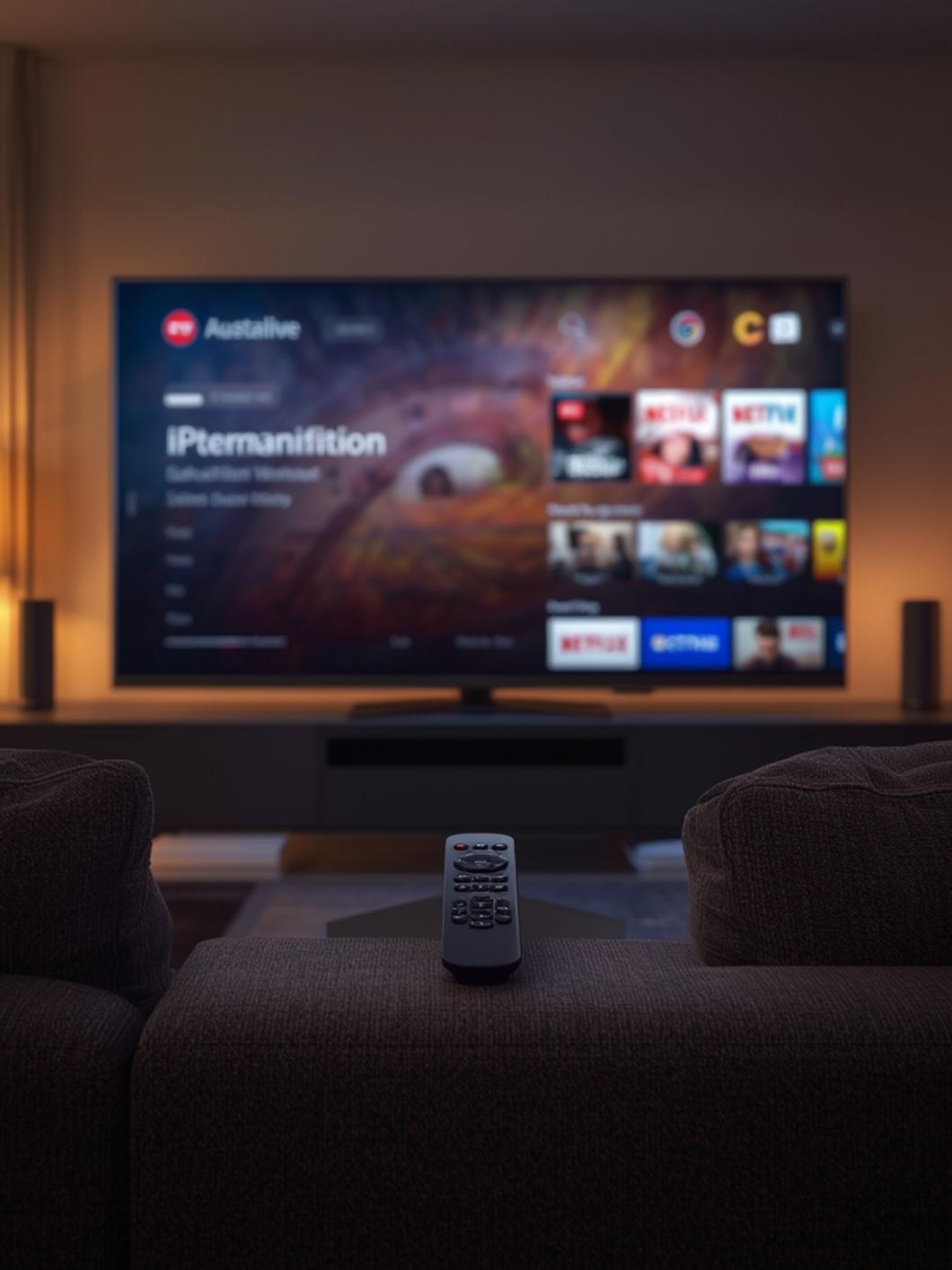
Getting the most from your IPTV subscription requires appropriate hardware and a properly optimised setup. The foundation of any good IPTV experience is a reliable internet connection. While IPTV can technically work on connections as slow as 10Mbps, for a buffer-free experience with HD content, you’ll want at least 25Mbps download speed. For households streaming to multiple devices simultaneously or accessing 4K content, 50-100Mbps becomes the sweet spot. The ACCC’s broadband monitoring program shows that most NBN connections can theoretically handle IPTV, but actual performance varies significantly by provider and location.
Device compatibility is another crucial consideration. While most IPTV services provide apps or configuration details for various platforms, the experience differs dramatically between devices. Android-based devices typically offer the most seamless experience, with Android TV boxes like the NVIDIA Shield ($300-350) providing premium performance. More budget-friendly options include the Amazon Fire Stick 4K ($79) and various Android TV boxes from brands like Xiaomi and MeCool ($80-150) available through Australian retailers.
Smart TVs with Android TV built-in (like many Sony and Phillips models) can run IPTV apps directly, eliminating the need for additional hardware. Samsung TVs with Tizen OS and LG’s WebOS have more limited IPTV app support but can still work with many services. Apple users face more restrictions, though some IPTV providers offer iOS apps that pass Apple’s stringent App Store requirements, and workarounds exist through browsers and media player apps.
For the best viewing experience, you’ll want to optimise your IPTV app settings. Most services allow you to adjust buffer size (increasing it on less stable connections), stream quality (balancing quality against performance), and EPG (Electronic Program Guide) settings. Many experienced users pair their IPTV subscription with media center applications like Kodi, which can enhance the interface and add features like content recording, though this requires more technical setup.
Network optimisation can significantly improve your IPTV experience. Connecting your streaming device via ethernet rather than Wi-Fi eliminates wireless interference issues. If ethernet isn’t practical, positioning your router centrally and using mesh Wi-Fi systems can improve wireless performance. Some routers allow you to prioritise streaming traffic through QoS (Quality of Service) settings, ensuring your IPTV stream gets bandwidth priority over other household internet usage.
iptv subscription cost australia — iptvservice.com.au
| Device Type | Pros & Cons for IPTV |
|---|---|
| Android TV Box | Best overall compatibility, customisable, powerful; Higher cost, requires some technical knowledge |
| Amazon Fire Stick | Affordable, easy setup, portable; Less customisable, Amazon ecosystem limitations |
| Smart TV (Built-in) | No additional hardware needed; Often underpowered, limited app support on non-Android TVs |
| Apple Devices | High performance, excellent UI; Most restrictive ecosystem for IPTV, limited app availability |
❓ Frequently Asked Questions
Is IPTV legal in Australia?
The legality depends on the specific service. Licensed IPTV providers like Fetch TV, Foxtel Now, and Kayo Sports are completely legal. Services that redistribute content without proper licensing agreements operate in legal grey areas. Using these services may potentially violate Australian copyright laws, though enforcement against individual users is relatively uncommon.
Do I need a VPN with my IPTV subscription?
While not strictly required, a VPN is strongly recommended for IPTV users. It enhances privacy, prevents potential ISP throttling, bypasses geo-restrictions, and adds a layer of security to your streaming activities. Quality VPN services cost around $5-12 monthly, with NordVPN, ExpressVPN, and Surfshark being popular choices among Australian IPTV users.
What internet speed do I need for buffer-free IPTV?
For standard definition content, 10Mbps should suffice. For HD content, aim for at least 25Mbps. For 4K streaming or households with multiple simultaneous streams, 50-100Mbps is recommended. Connection stability is as important as raw speed—a consistent 25Mbps connection is better than a fluctuating 100Mbps line.
Can I watch Australian channels on IPTV?
Yes, most comprehensive IPTV services include Australian channels including ABC, SBS, Seven, Nine, Ten and their digital offshoots. Premium services also include Australian pay TV channels. The quality and availability of local channels can vary between providers, so it’s worth checking the channel list before subscribing.
How many devices can use one IPTV subscription?
This varies by provider and subscription tier. Basic plans typically allow 1-2 simultaneous connections, while premium plans may support 4-5 devices streaming concurrently. Some providers offer specific multi-user or family plans. Using more connections than your plan allows can result in service interruptions or account suspension.
Privacy and Security Considerations for Australian IPTV Users
Privacy concerns have become increasingly important for IPTV users in Australia. Your internet service provider (ISP) can potentially monitor your streaming activities, which may lead to bandwidth throttling of IPTV traffic during peak hours. This practice, while not universal among Australian ISPs, has been reported by users of certain providers. More concerning is the potential for your viewing data to be logged, creating a permanent record of your content consumption.
A reliable VPN service is the primary solution to these privacy concerns. By encrypting your internet traffic, VPNs prevent your ISP from seeing what content you’re streaming. Popular VPN services among Australian IPTV users include NordVPN, ExpressVPN, and Surfshark, with annual plans typically offering the best value. When selecting a VPN specifically for IPTV, prioritise services with Australian servers, strong encryption, a strict no-logs policy, and sufficient speed to handle HD streaming.
Beyond privacy, security risks also exist in the IPTV ecosystem. Free or suspiciously cheap IPTV apps sometimes contain malware or adware, particularly when downloaded from unofficial sources. Stick to official app stores or direct downloads from reputable providers. Payment security is another consideration—use providers that offer secure payment methods like credit cards with fraud protection or PayPal rather than direct bank transfers or cryptocurrency payments that offer limited recourse if issues arise.
Some IPTV services require you to install their custom apps, which may request extensive device permissions. Be wary of apps requesting unnecessary access to your contacts, files, or other sensitive areas of your device. Reputable services typically work with established media player apps that don’t require excessive permissions. Similarly, exercise caution with services requiring you to disable your device’s security features or install certificates that could potentially compromise your overall device security.
For households in Hobart, Darwin, and other Australian cities with variable internet infrastructure, network security also deserves attention. Ensure your home network uses strong Wi-Fi passwords and WPA3 encryption if supported. Consider creating a separate guest network for your streaming devices to isolate them from computers and phones containing sensitive personal data. Regularly update your router’s firmware to patch security vulnerabilities that could be exploited.
Comparing IPTV to Traditional Australian Streaming Options
The Australian streaming market has become increasingly fragmented, with content spread across multiple platforms at cumulative costs that strain household budgets. Netflix ($16.99/month for Standard), Stan ($16/month), Disney+ ($13.99/month), Amazon Prime ($9.99/month), Binge ($18/month), and Paramount+ ($8.99/month) represent just the mainstream options. Add speciality services like Kayo for sports ($25/month), and a comprehensive streaming setup easily exceeds $100 monthly.
IPTV offers a compelling alternative with consolidated content access at significantly lower prices. A quality IPTV subscription at $15-20 monthly potentially provides access to content from all these platforms and more, including international programming unavailable on any Australian service. The economic argument becomes particularly strong for households interested in specific international content that would otherwise require multiple specialised subscriptions.
Content availability comparisons heavily favour IPTV, particularly for sports enthusiasts and international content seekers. While Australian services might offer selected international sports, comprehensive coverage requires multiple subscriptions. Similarly, fans of British television might find some content on Stan or ABC iView but miss out on many BBC, ITV, and Channel 4 programs. IPTV potentially provides complete access to these channels and their catch-up libraries.
User experience represents a trade-off. Mainstream services like Netflix offer polished, user-friendly interfaces with sophisticated recommendation algorithms and seamless device switching. IPTV interfaces vary widely in quality, with some premium services offering impressive, intuitive experiences while others present more utilitarian, function-over-form approaches. Navigation of large channel lists and content libraries can be more cumbersome on IPTV, though this improves with experience and proper setup.
Reliability comparisons yield mixed results. Top-tier streaming services maintain excellent uptime and consistent quality, though they occasionally suffer outages during major releases or sporting events. IPTV reliability varies significantly by provider, with premium services approaching mainstream reliability while budget options may experience more frequent interruptions. The Best Prices on quality IPTV services typically deliver reliability sufficient for most users, particularly when paired with appropriate hardware and internet connections.
🎯 Final Verdict
For many Australians, an IPTV subscription represents outstanding value in our fragmented, expensive streaming landscape. You’re getting dramatically more content at a fraction of the cost of traditional options. The sweet spot seems to be mid-tier providers offering reliable HD streams around the $15-20 monthly mark, with even better value through annual subscriptions. The Best Prices at iptvservice.com.au consistently deliver quality streams without breaking the bank. If you’re fed up with juggling multiple subscriptions or missing out on international content, IPTV is absolutely worth exploring—just approach with appropriate privacy measures, realistic expectations, and a willingness to spend time optimising your setup. The days of paying the “Australia tax” for limited content may finally be over.